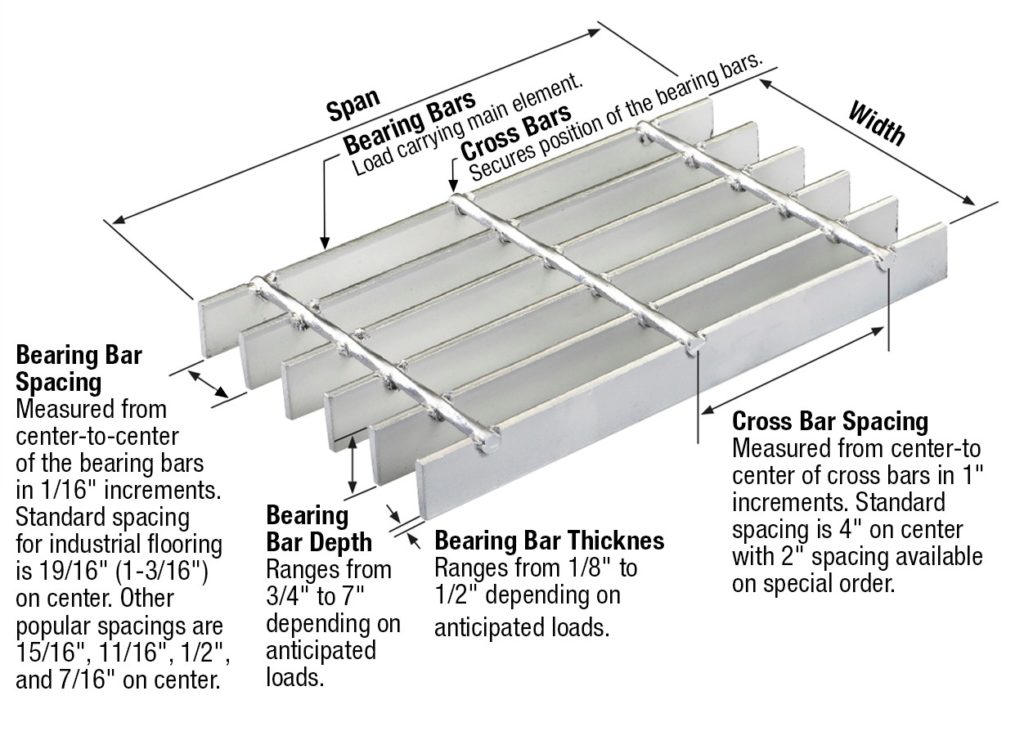
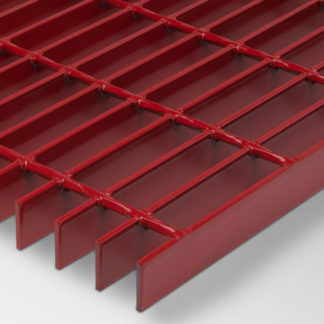
Metal bar grating is the workhorse of the industrial flooring market and has served industry for decades. Strong and durable with an exceptional strength-to-weight ratio, metal bar grating can be easily fabricated to nearly any configuration. The high percentage of open area makes bar grating practically maintenance-free, and all products are fully recyclable.
Manufactured by assembling a series of equally spaced metal bars to connecting cross members, bar grating is available in three popular materials: mild carbon steel, 6000 series aluminum, and 300 series stainless steels. Additionally, Grating Pacific has the capacity to produce gratings constructed with other specialty metal alloys.
Manufacturing Methods
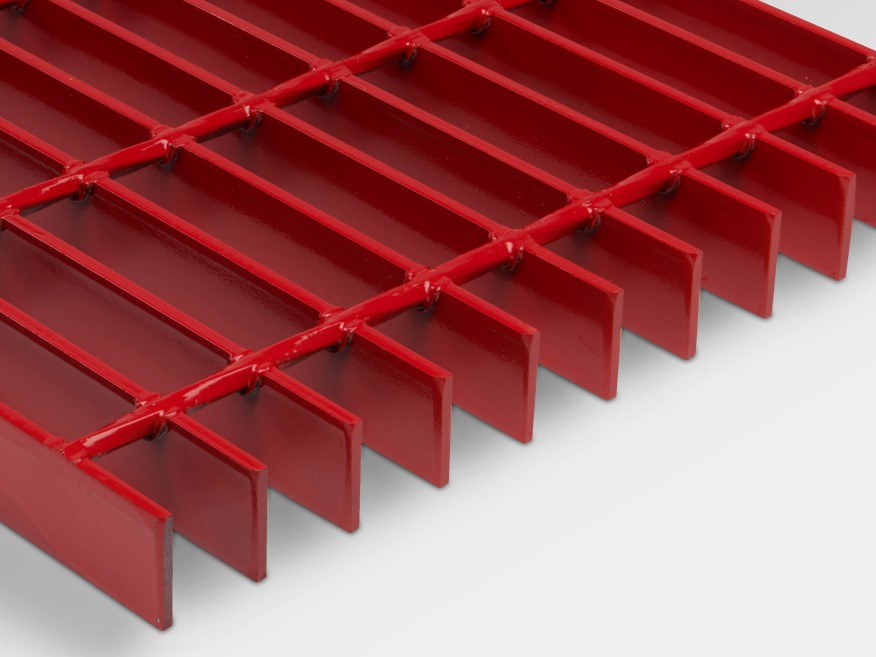
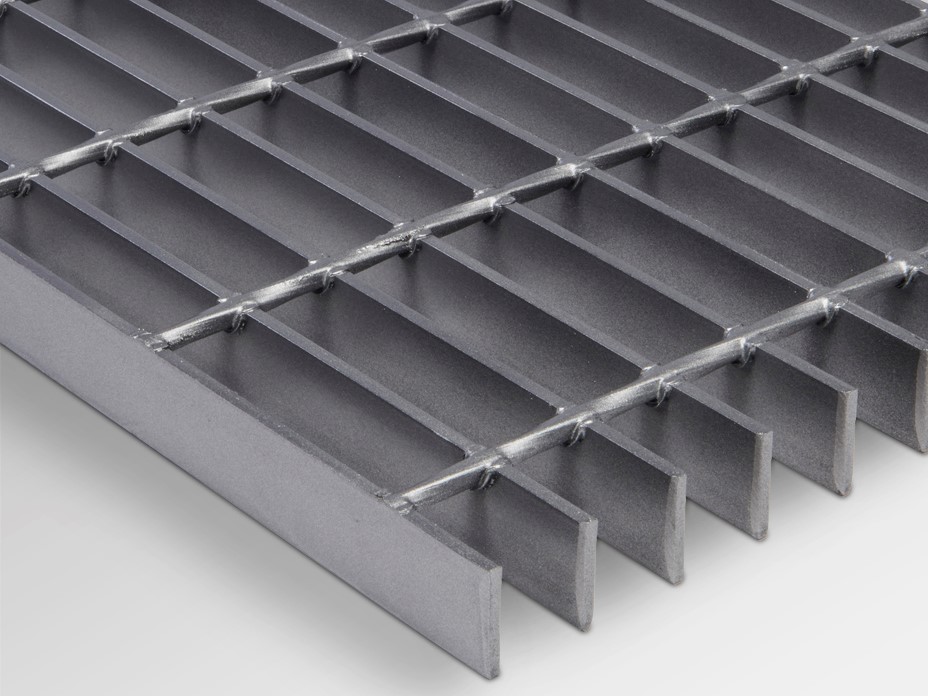
Welded Grating
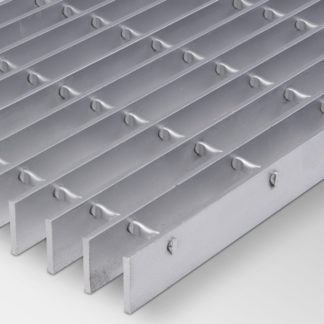
Economical design ideal for most industrial applications. Manufactured by welding the bearing and cross bar intersection, typically with automated forge welding equipment. Available in carbon and stainless steel.
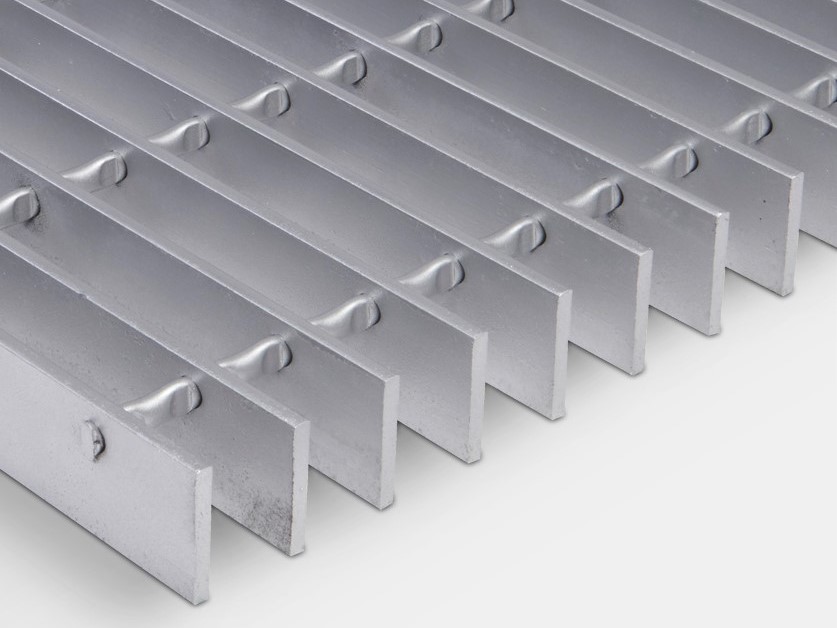
Swage Locked Grating
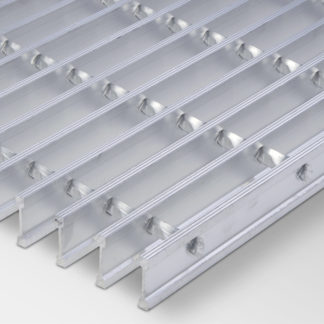
Popular for the manufacture of aluminum, stainless steel, and close mesh gratings. Cross bars are inserted into pre-punched holes in the bearing bars and hydraulically deformed to lock the bars in place.
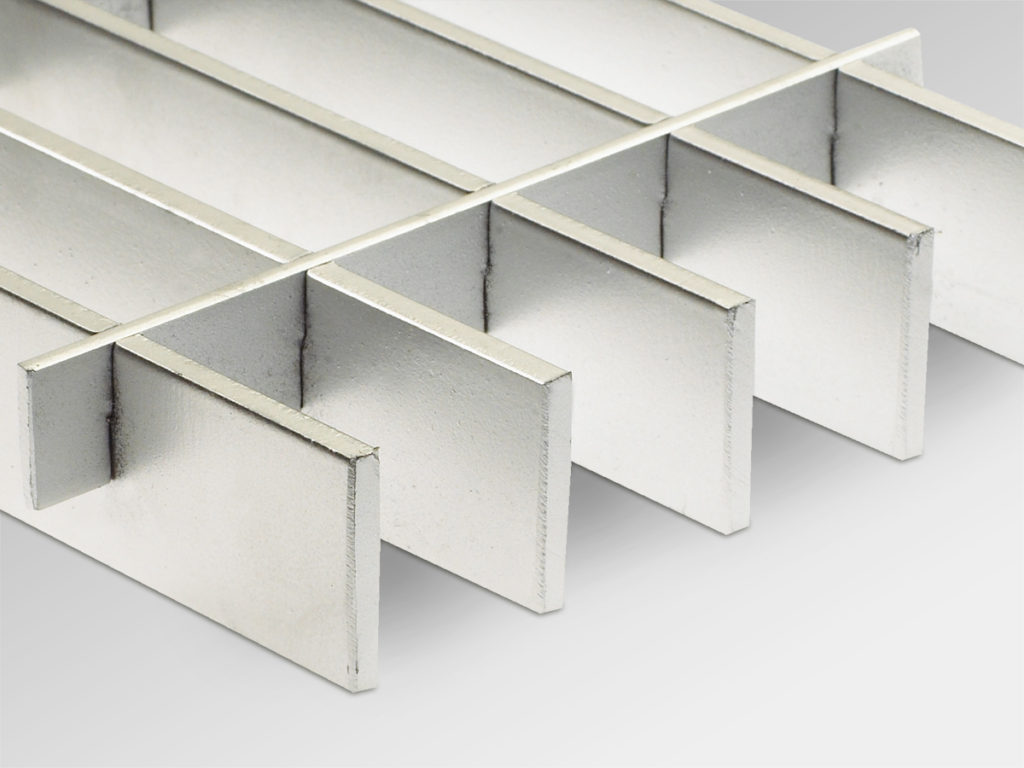
Dovetail Pressure Locked Grating
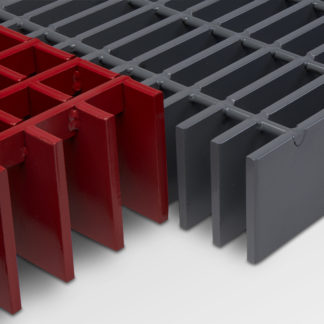
Assembled by inserting pre-punched bearing and cross bars into an “eggcrate” configuration and deforming the cross bars under intense hydraulic pressure. Available in all materials and ideal for architectural and ornamental applications.
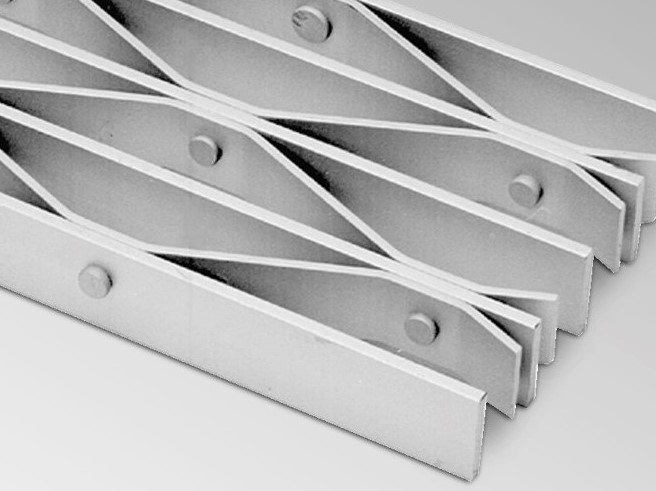
Riveted Grating
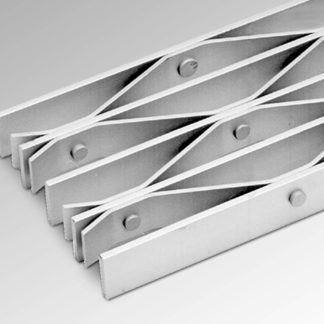
Exceptionally durable grating manufactured by riveting bearing bars and bent connecting bars at their contact points. Excellent for applications involving impact loads and repetitive traffic patterns.
Specification Criteria
At Grating Pacific, our goal is to supply quality products that provide continued service and value to end-users. With that in mind, when specifying metal bar grating for your next project, it is important to consider the following factors:
Service load required and acceptable deflection
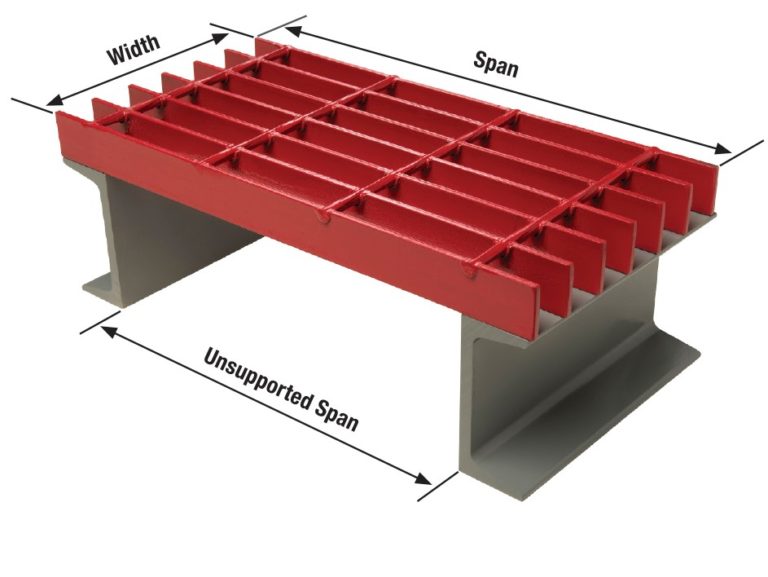
Unsupported clear span
Walking surface
Banding and trim
Finish
Service Loads
The load tables within this website provide load and deflection criteria for most common applications. These tables provide a concise reference to aid in the selection of the appropriate bearing bar size and spacing for the intended application.
Pedestrian loads are commonly analyzed with uniform and concentrated loads. For pedestrian comfort, deflection is typically limited to 1/4″.
Heavy duty and vehicular load tables are presented for specific load conditions with deflection limited to the lesser of 1/8″ or L/400.
If your application is not addressed by the load tables found in this website, please contact Grating Pacific for assistance selecting the product most appropriate for your application.
Surface Options
Plain Surface
Standard surface with excellent “self-cleaning” characteristics. Suitable for most applications.
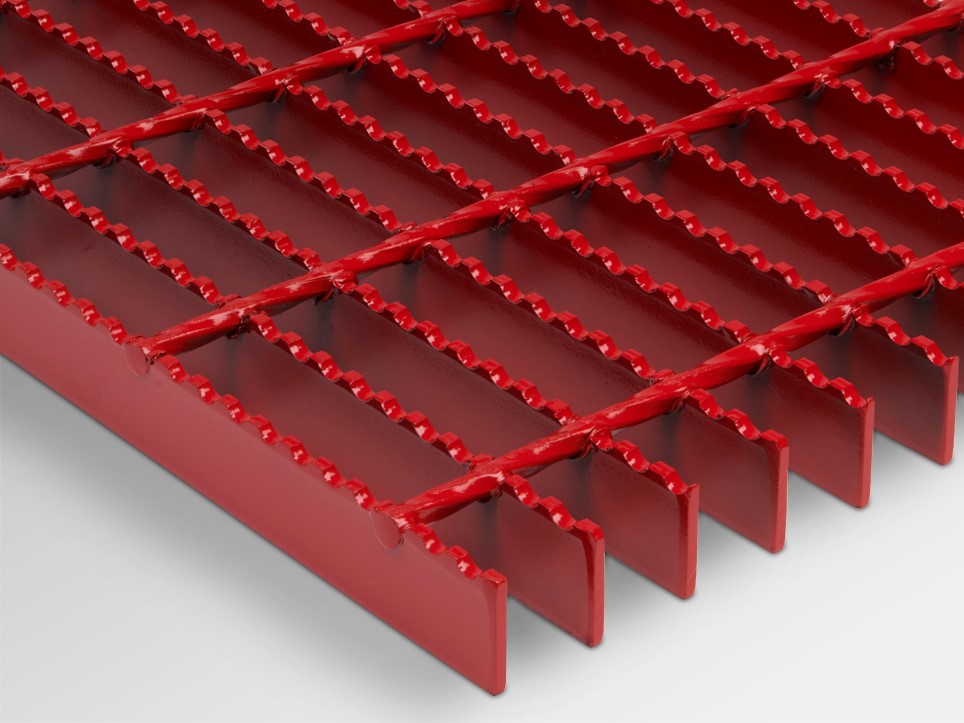
Serrated Surface
Preferred for applications where moisture or fluids cause the walking surface to become wet and slippery.
OnGrip™ Surface
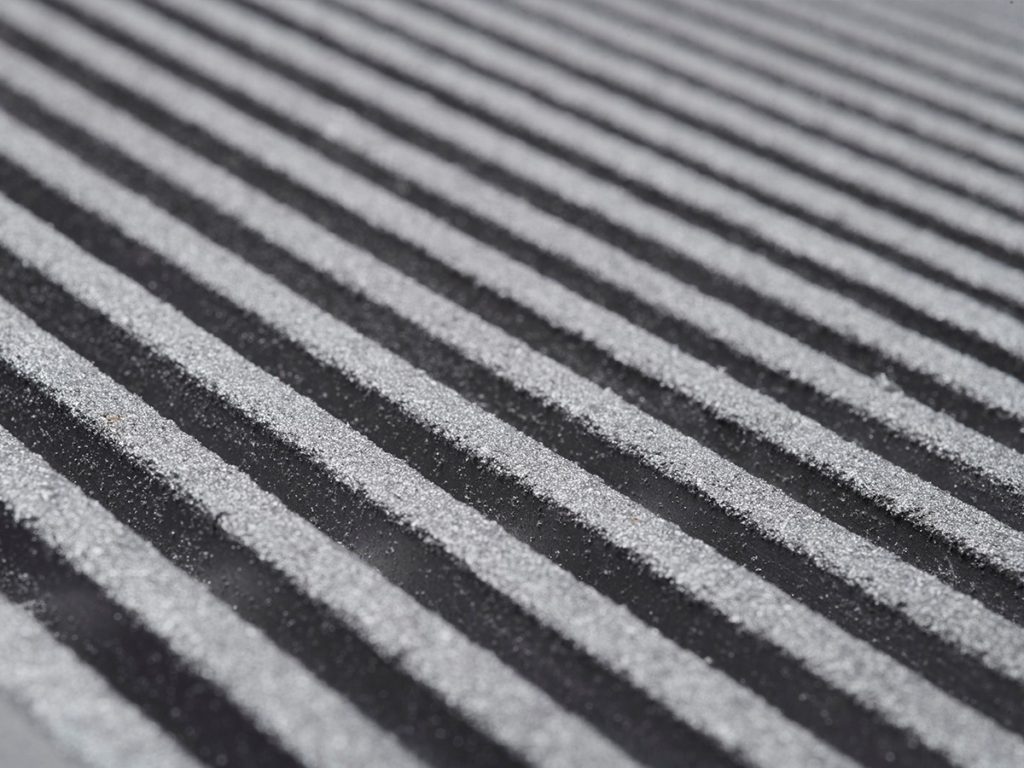
Durable slip-resistant walking surface provides enhanced slip-resistance for applications in the public way.
Finishes
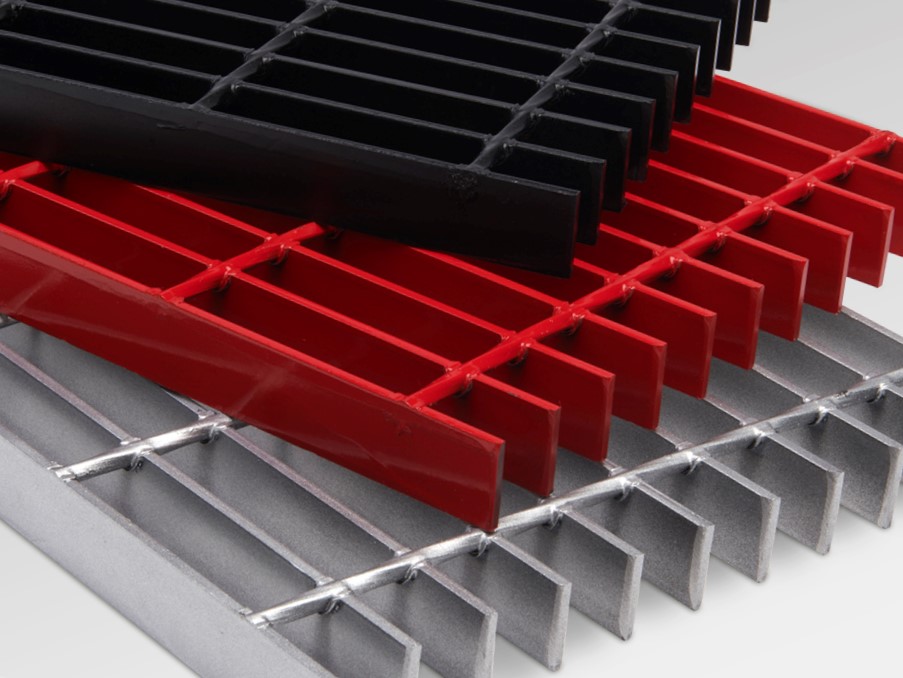
Steel products are commonly provided with one of three finishes: bare steel (no finish); painted with one coat of manufacturers red, black, or silver paint; or hot dip galvanized in accordance with ASTM A123.
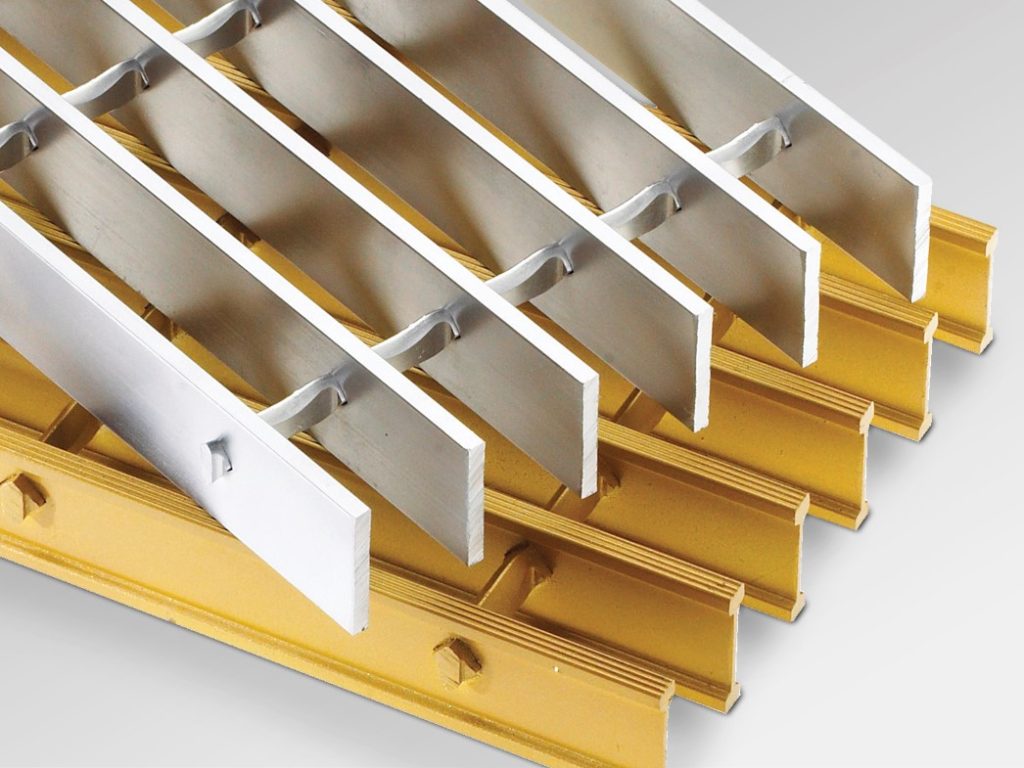
Aluminum products are offered mill finish with optional chemical cleaning or anodizing also available.
Stainless Steel products typically require secondary cleaning due to discoloration that occurs during welding and fabrication. Commercial cleaning, passivation, or abrasive blasting can provide a uniform matte surface while electro-polishing leaves a bright stainless finish.
All products can be provided with specialty finishes including enamel or epoxy paints, or powder coating. When considering specialty finishes, contact Grating Pacific for consultation.
Painted Steel Bar Grating
Standard colors: black, red, or silver
Anodized Aluminum Grating: clear or bronze finish
Banding
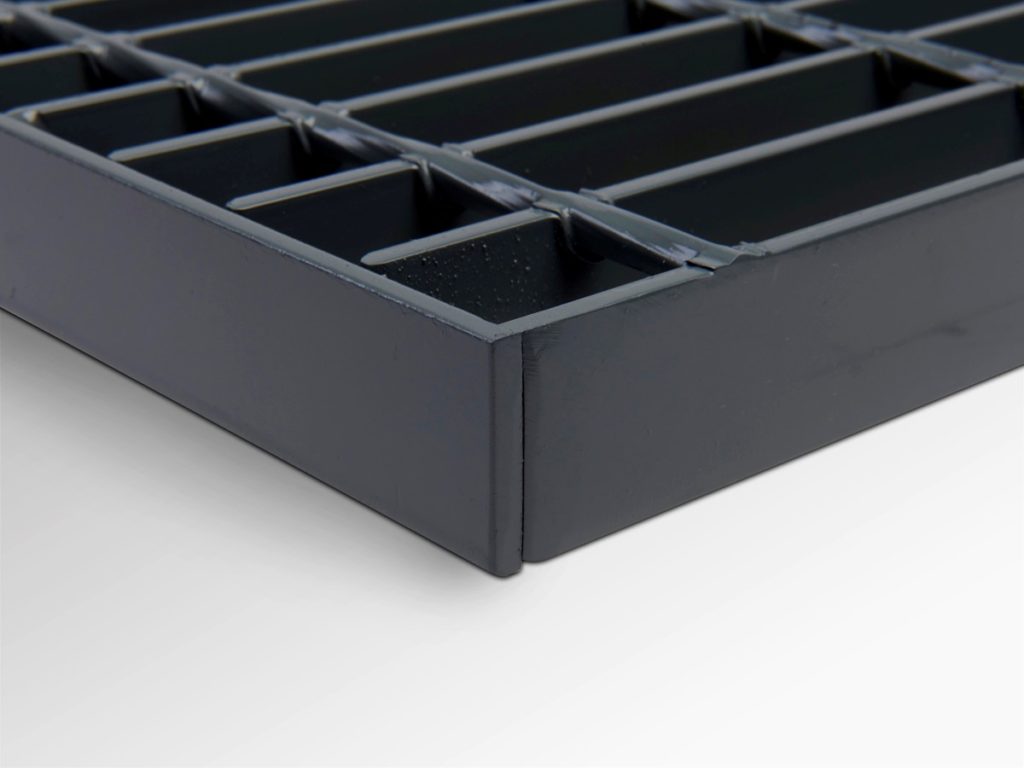
The open ends of the grating may be banded to provide additional transverse stiffness and a finished architectural appearance. Achieved by welding a flat bar, similar in size to the bearing bars, to the cut ends, banding enhances safety and should always be specified when gratings are designed to be removable.
Banding can reduce impact stress by transferring load to adjacent bearing bars and should always be specified when gratings are subject to vehicular loads. Further banding descriptions and welding standards can be found here.
To provide the best experiences, we use technologies like cookies to store and/or access device information. Consenting to these technologies will allow us to process data such as browsing behavior or unique IDs on this site. Not consenting or withdrawing consent, may adversely affect certain features and functions.
Functional
Always active
The technical storage or access is strictly necessary for the legitimate purpose of enabling the use of a specific service explicitly requested by the subscriber or user, or for the sole purpose of carrying out the transmission of a communication over an electronic communications network.
Preferences
The technical storage or access is necessary for the legitimate purpose of storing preferences that are not requested by the subscriber or user.
Statistics
The technical storage or access that is used exclusively for statistical purposes.The technical storage or access that is used exclusively for anonymous statistical purposes. Without a subpoena, voluntary compliance on the part of your Internet Service Provider, or additional records from a third party, information stored or retrieved for this purpose alone cannot usually be used to identify you.
Marketing
The technical storage or access is required to create user profiles to send advertising, or to track the user on a website or across several websites for similar marketing purposes.