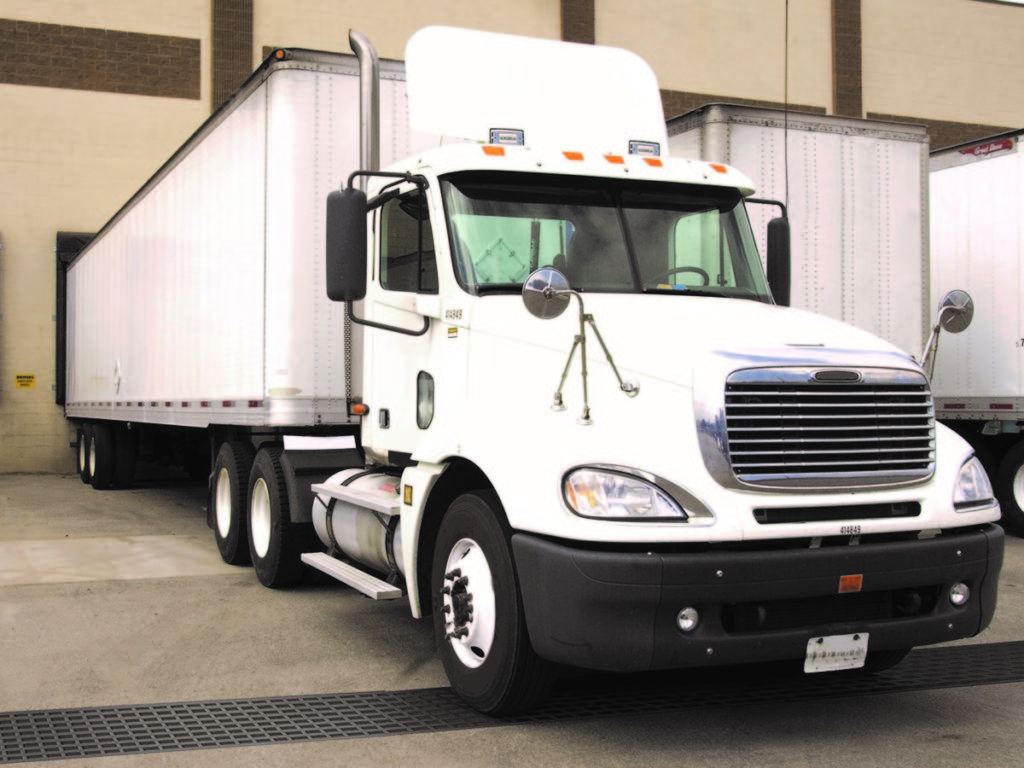
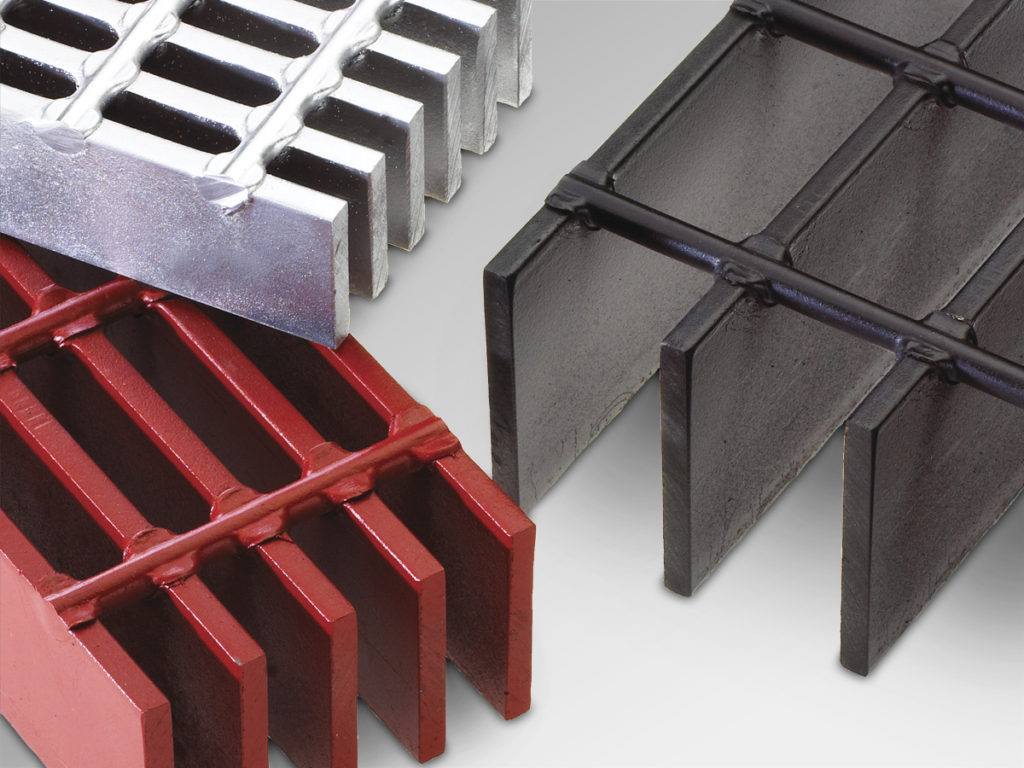
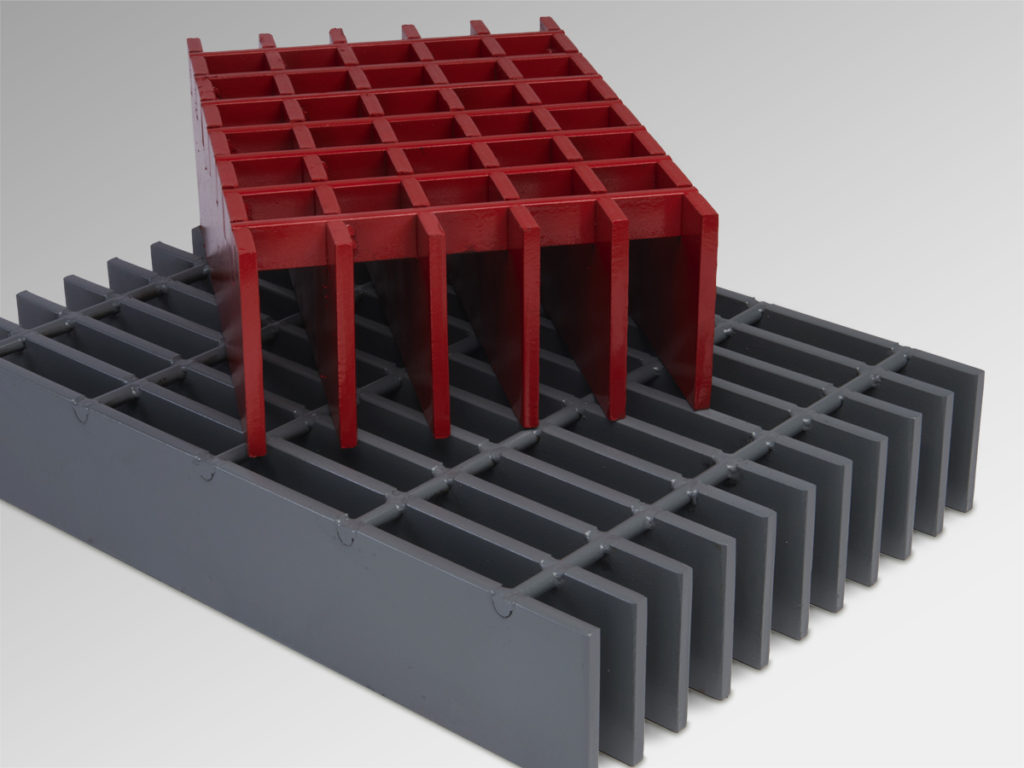
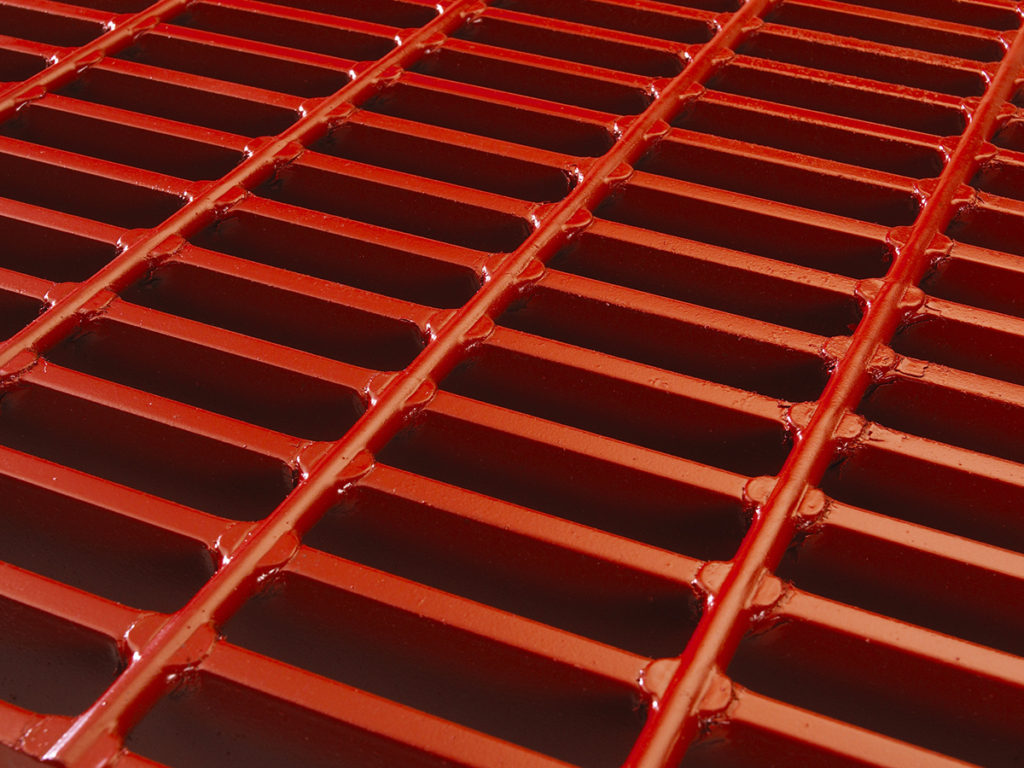
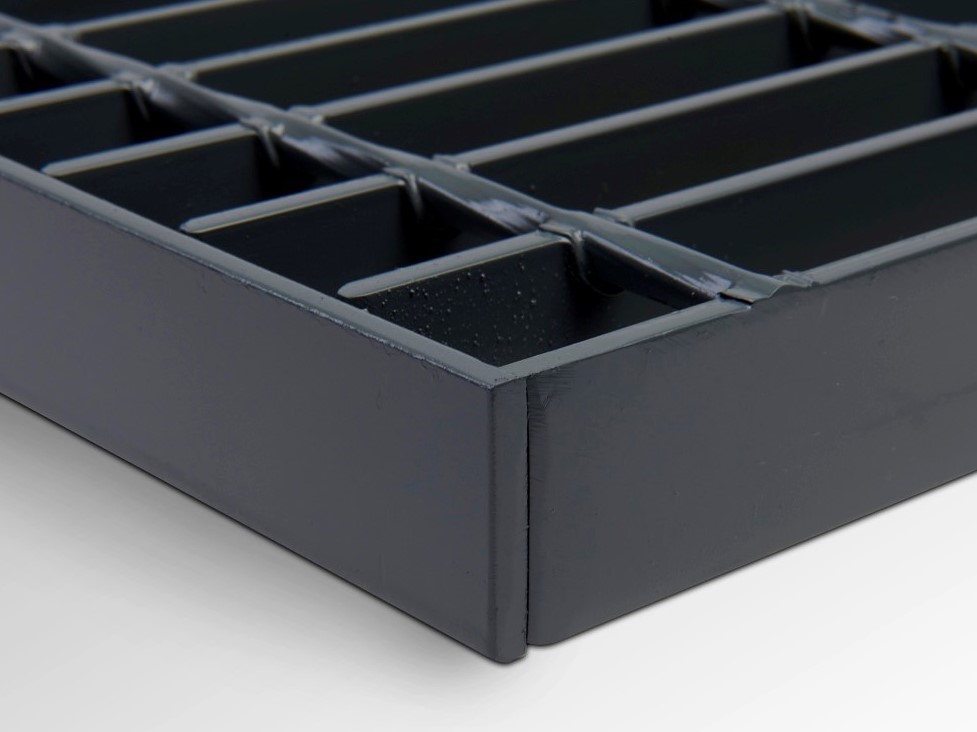
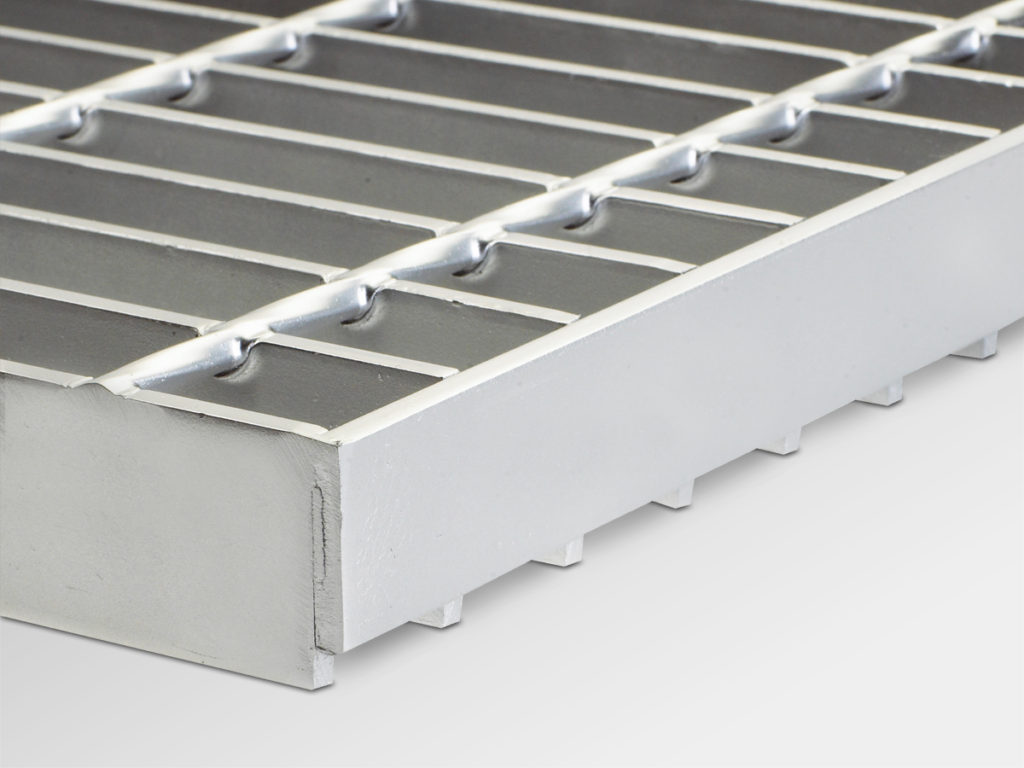
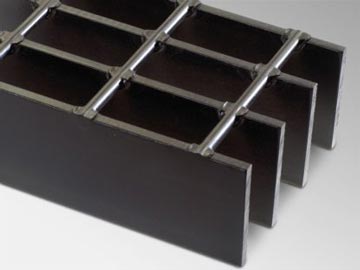
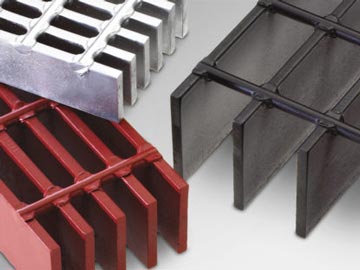
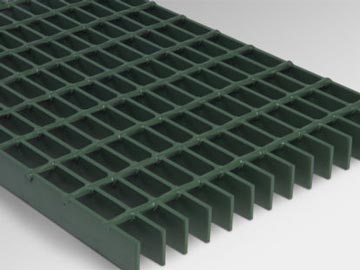
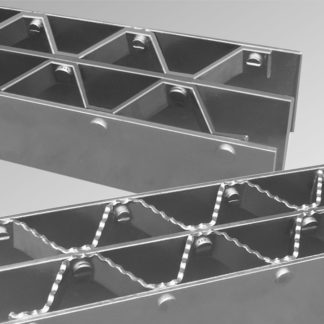
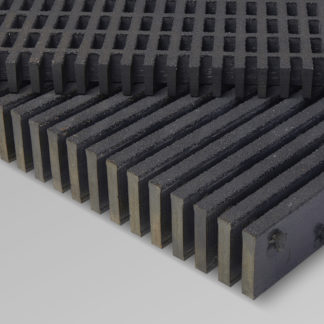
Welded heavy duty gratings are designed to service applications subject to heavy rolling and static loads such as highways, plant floors, loading docks, inlet covers, and airports. Products are available in a wide range of bar sizes and spacings to accommodate conditions ranging from smaller forklift to large truck or aircraft traffic.
Manufactured in carbon steel and 300 series stainless steels, a variety of finishes are available.
Heavy Duty Bar Grating Design Elements
Design Criteria
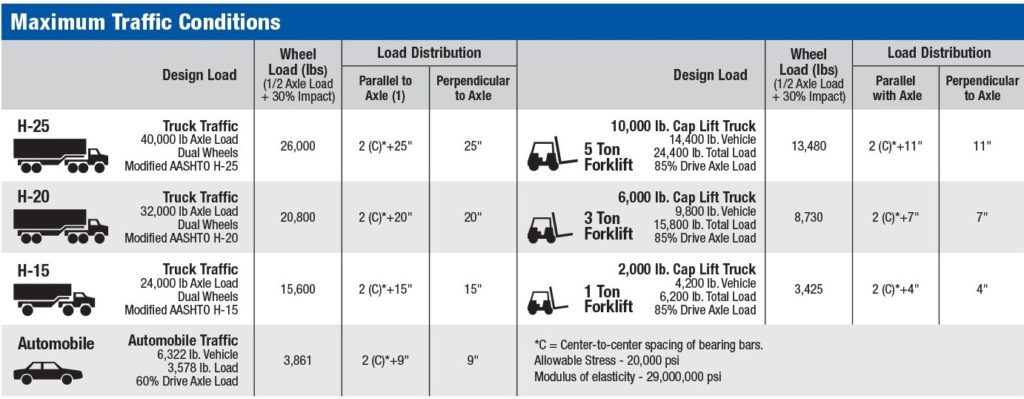
Vehicular loads are designed in conformance with current AASHTO specifications for classifications H-15 through H-25. Automobile and forklift loads are similarly evaluated with loads calculated and distributed in accordance with the stated “Maximum Traffic Conditions”. If your application is not adequately addressed by these load conditions, please contact our Engineering Department and we will gladly assist with your specific needs.
Materials & Spacings
Heavy duty gratings are manufactured in carbon steel and 300 series stainless steels. Carbon steel products are available bare (no finish), painted with manufacturers standard paint, or hot dip galvanized. Stainless steel products are available mill finish, commercially cleaned, or electro-polished.
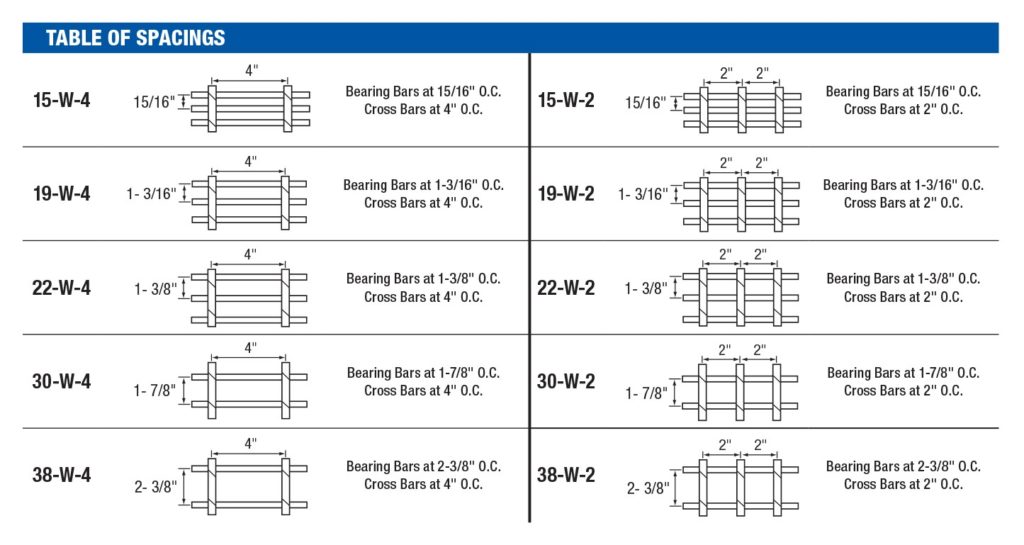
Below you will find a table of spacings for our most popular products.
Heavy Duty Bar Grating Load Tables
Load tables are provided for 15, 19, 22, 30, and 38 space heavy duty bar grating. Details are provided for bearing bars up seven inches in depth, and maximum safe spans for H-25, H-20, and H-15 loads, as well as auto traffic loading, and 1 ton, 3 ton, and 5 ton forklift loading. Custom heavy duty bar grating spacings and depths are available. For further loading details, and customized spacings, please contact our technical sales team.
Once the bar spacing is selected, the bearing bar size must be specified based upon the Maximum Traffic Conditionsand the unsupported clear span to be served. Consult the load tables for the maximum clear span of our most popular products.
For maximum durability, our load tables incorporate strict limitations where design deflection shall not exceed the lesser of L/400 or .125″ for the spans indicated.
Cross Bar Selection
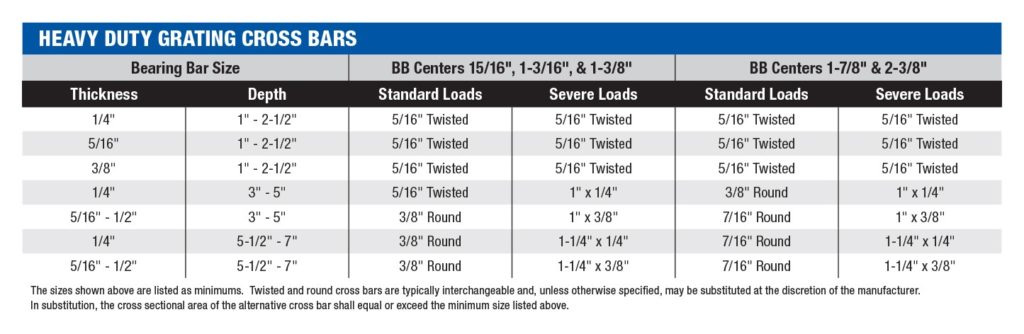
While bearing bar selection is critical for specifying a proper heavy duty grating, the life cycle of your installation will often be influenced by the selection of the appropriate cross bar. The table below details the variety of cross bar sizes available.
The cross bars listed for Standard Loads are the customary twisted square or round cross bars supplied by Grating Pacific for a particular bearing bar size and spacing. These sizes have been selected to maximize manufacturing efficiency and are best used when the grating is subject to intermittent traffic with occasional full capacity loading.
The cross bars listed for Severe Loads are optional and will provide superior durability when gratings are subject to intense, continuous, or repetitious traffic. These robust cross bars increase lateral stiffness thereby extending the service life of the grating. When specifying gratings with bearing bars centered at 1-3/8″, 1-7/8″, or 2-3/8″ on center, consideration of Severe Loading cross bars is highly recommended.
Note: In the event that a cross bar size is not specified, the cross bar shall be selected at the discretion of the manufacturer.
Banding
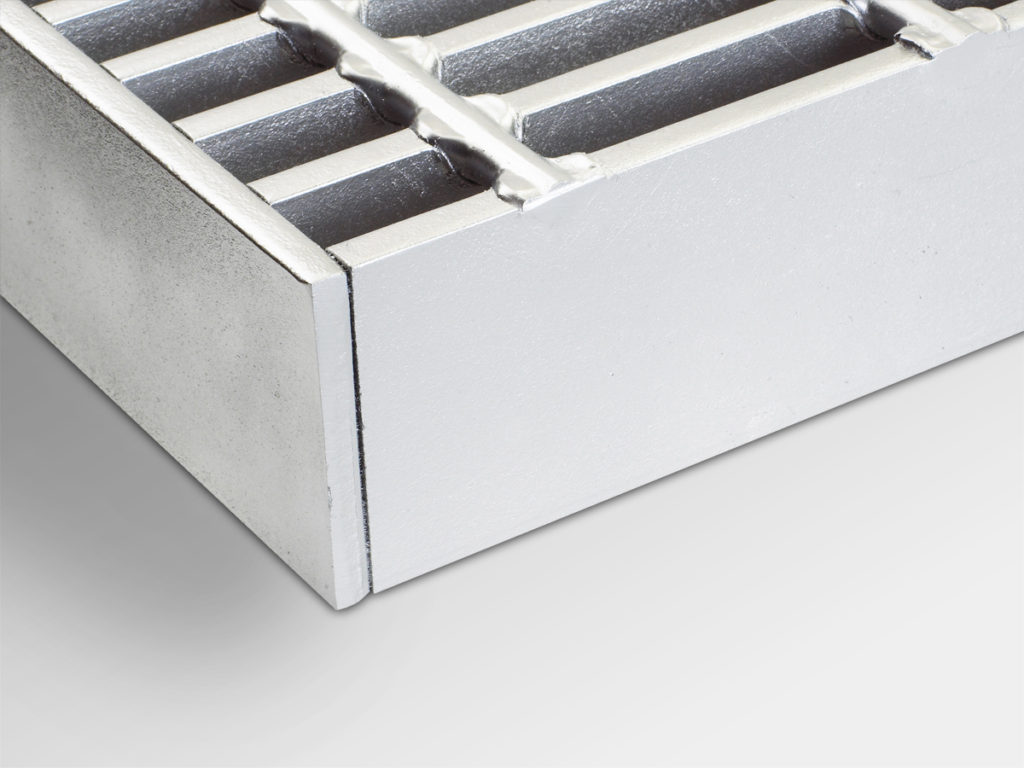
Heavy duty gratings are commonly subjected to shock and impact loads and it is highly recommended that all open ends be banded. The welded band bar helps distribute impact loads and minimizes distortion when subjected to repetitive traffic patterns. For additional information, see Banding Details.
Serrated Surface
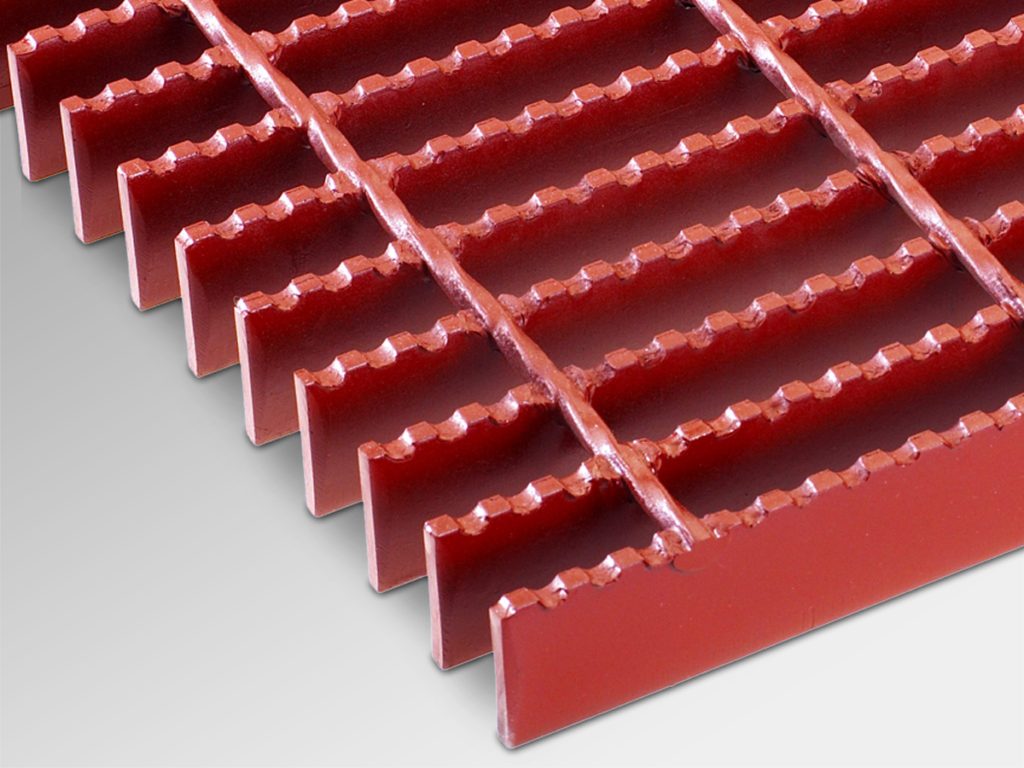
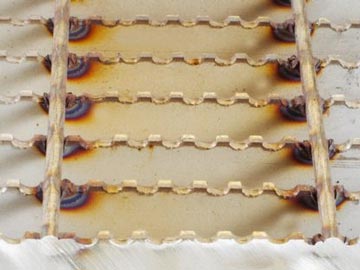
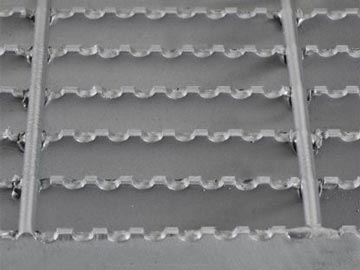
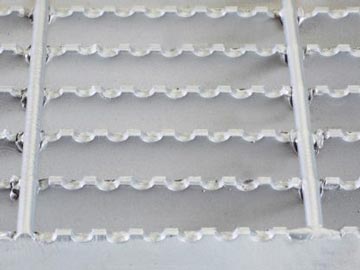
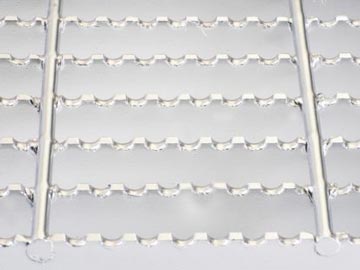
Optional serrated bearing bars enhance skid-resistance. Consider this surface for applications subject to the accumulation of liquids or lubricants or inclined installations.
How to Specify
Select type of grating
“W” for welded steel grating
“WS” for stainless steel grating
Select bar spacing from Table of Spacings
Select bearing bar size from load tables
Specify cross bar size from table above
Specify plain or serrated surface
Specify banding and any additional trim required
Specify finish
Bare steel (no finish)
Painted (red, black, silver, other)
Hot Dip Galvanized (per ASTM A123)
Other
Specify fasteners (if required)
Banding
Banding is available to protect the open ends of the grating panel. During the banding process a metal flat bar is welded to the open ends of the grating panel. This process increases the transverse stiffness of the panel and provides a finished architectural appearance.
Banding should always be specified for the following applications:
Removable grating panels – Banded ends provide additional worker safety during the handling of the panels.
Vehicular load exposure – The band bar reduces impact stress by transferring loads to adjacent bearing bars thus increasing resistance to grating deformation caused by repetitive traffic.
Optional Load Banding is available and has welds at each bearing bar which helps distribute the load throughout the grating panel in addition to providing the uniform end finish(view details.)
Standard Trim Banding
The band bar that is welded to the end of the grating panel is the same height and thickness of the bearing bars. This provides a uniform appearance on all sides of the grating panel.
Trench Banding
The band bar is a smaller height than the bearing bars, and is therefore elevated above the bottom of the bearing bars. This banding application allows for greater drainage liquids will not be become trapped between the grating and the support structures.
Surface Options
Plain Surface
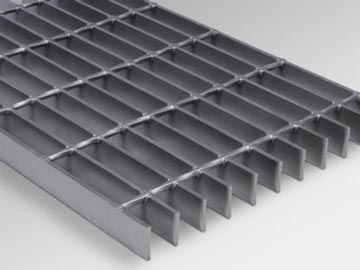
Standard surface with excellent self-cleaning characteristics. Suitable for most applications.
Serrated Surface
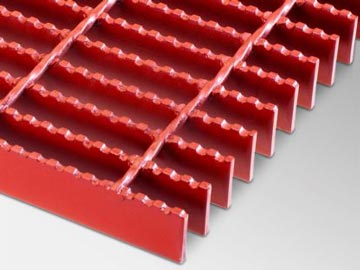
Notched bearing bars provide increased slip resistance. Ideal for applications where moisture or fluids may be present on or near the walking surface.
OnGrip™ Surface
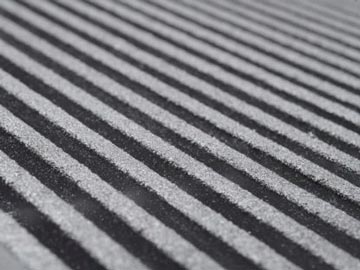
Applied grit surface for increased traction and slip resistance. Popular for applications in the public way.
Carbon Steel Finish Options
Bare Steel
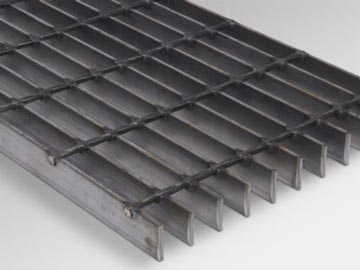
Mill finished carbon steel bars without additional coating. Will show discoloration from welding and fabrication. Subject to rusting.
Hot Dip Galvanized
Zinc coating applied in accordance with ASTM A123. Provides long lasting corrosion resistance.
Painted
One coat of manufacturer’s standard paint. Standard colors are black, red, and silver.
Other Finishes
Specialty coatings may be specified in a wide range of colors. Some options include powder coating, vinyl coating, enamel, or epoxy paints.
Stainless Steel Finish Options
Mill Finish
Mill finish stainless steel bars will show discoloration from welding, cutting, and grinding. Satisfactory for industrial applications where appearance is not a consideration.
Abrasive Blast
A uniform, matte finish achieved by abrasive blasting.
Commercial Clean
A uniform, matte finish is achieved by abrasive blasting followed by passivation to remove manufacturing contaminants.
Electro-Polished
A bright chrome-like appearance achieved by immersion in chemicals that clean and “polish” the base metal.
Bar Grating Fabrication and Engineering
We offer complete engineering services from concept to production. This includes design consultation, technical manuals, CAD drafting, engineering certification, and custom design services.
Once your plans are approved, our fully trained production staff will transform stock panels into the custom components your project calls for. Our services include full layouts, saw cutting, flame or plasma cutting, welding, punching, banding, and finishing.
We also fabricate stair treads, frames, and install lifting devices as needed.
All panels are piece marked to match installation drawings that ship with your order.
Steel Bar Grating Welding & Fastener Information
Welding will provide a superior, permanent installation. Mechanical fasteners, also known as grating clips, are great options when steel bar grating will need to be removed or welding is not practical.
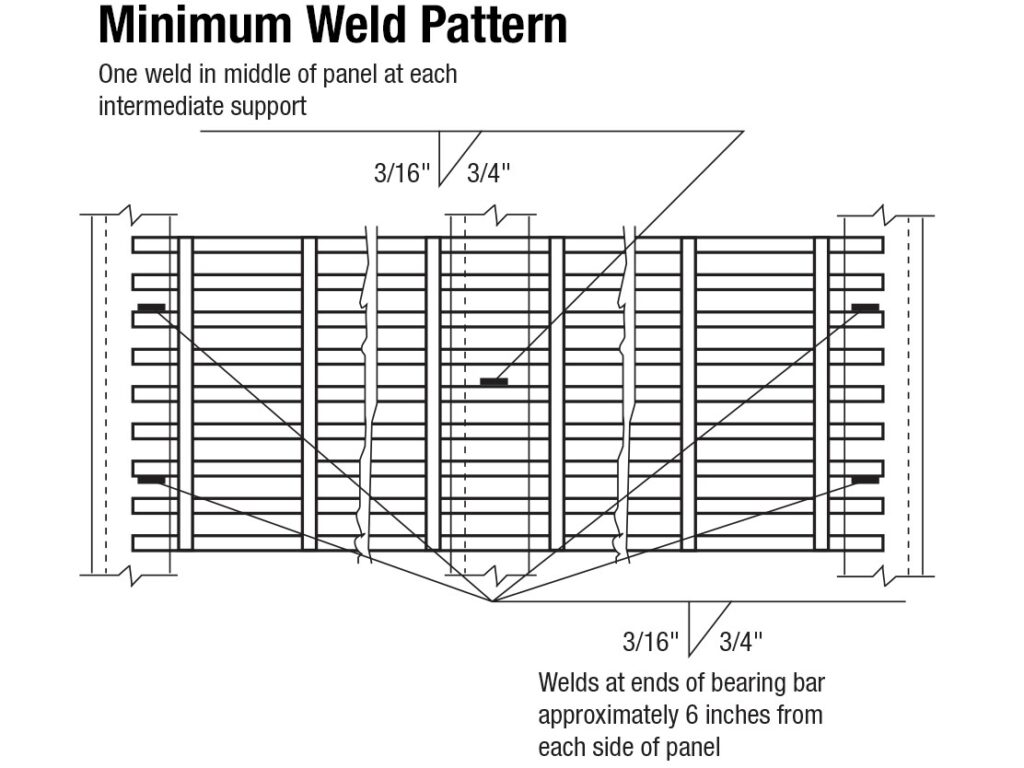
The recommended minimum weld pattern shown indicates the minimum fastener spacing for pedestrian applications. Vehicular applications typically require additional welding, size, and spacing as to be determined by the specifying authority.
Saddle Clips
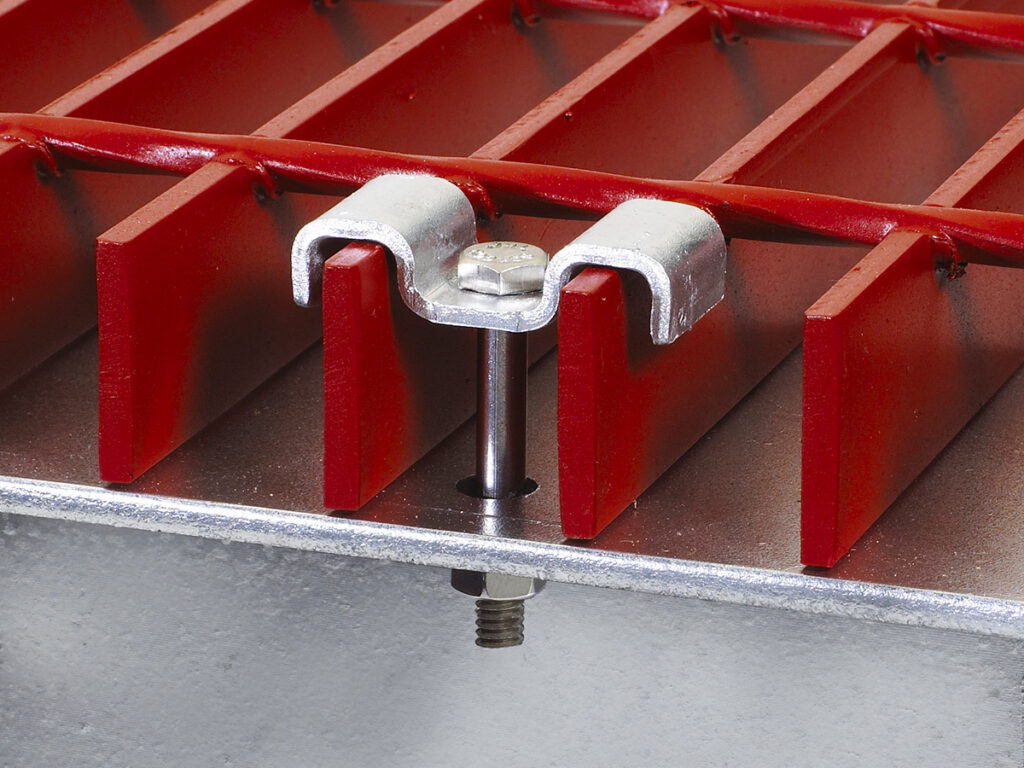
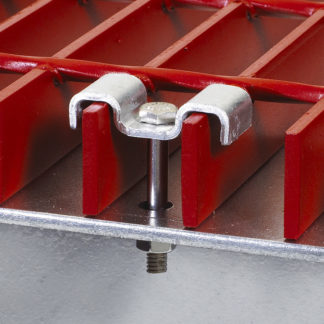
Bent clips bridging two bearing bars are available in galvanized steel, stainless steel, or aluminum. Standard bolt holes are 5/16″. Bolts, screws, or other connecting hardware shall be supplied by others.
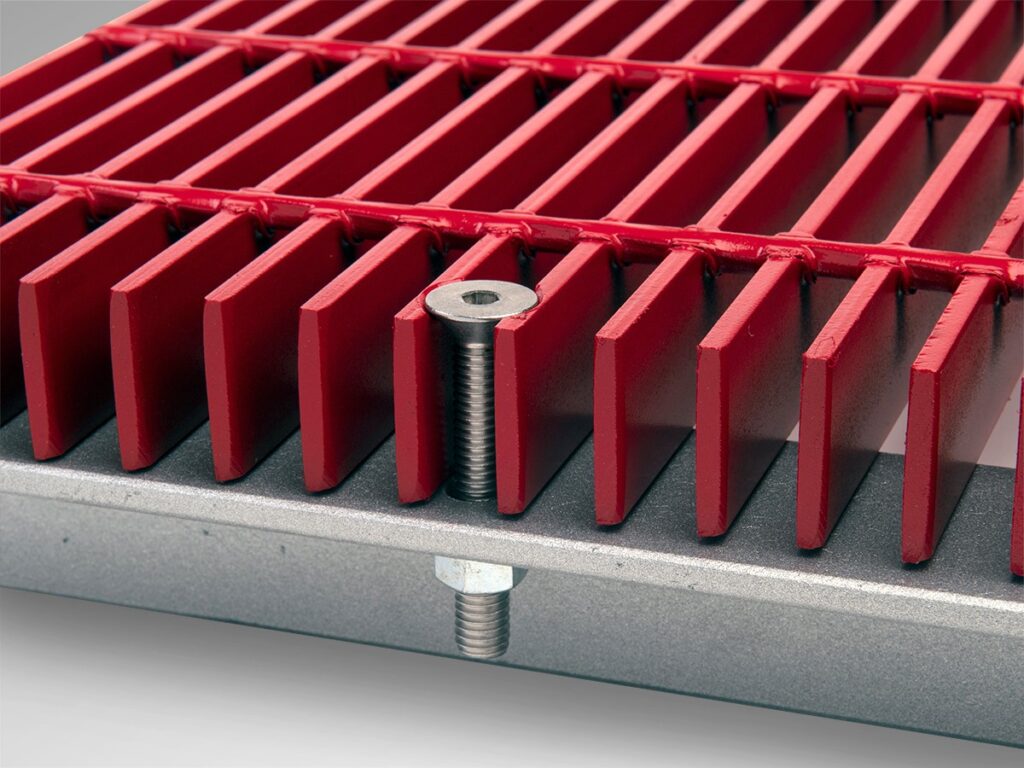
Countersunk Lands
The narrow spacing of close mesh grating allows for countersinking or milling of the bearing bars to support bolt shoulders. Flat head screws or self-drilling fasteners shall be supplied by others.
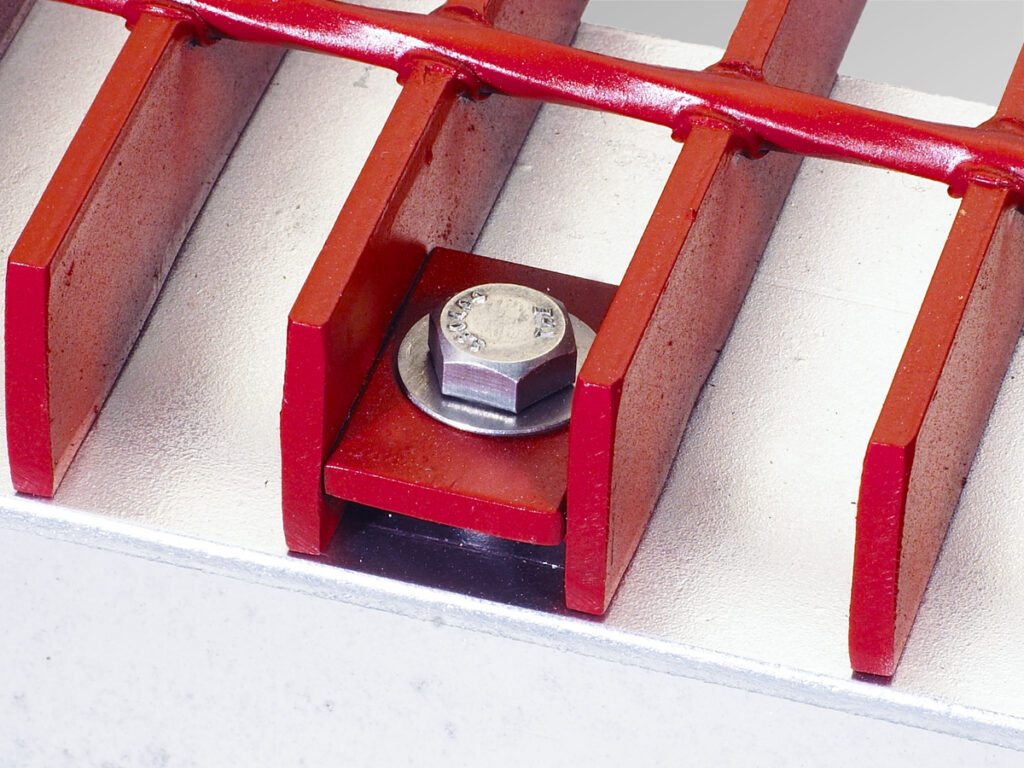
Weld Lugs
Plates, punched with holes and welded between the bearing bars, facilitate bolting to the supporting structure. Bolts, screws, or other connecting hardware shall be supplied by others.
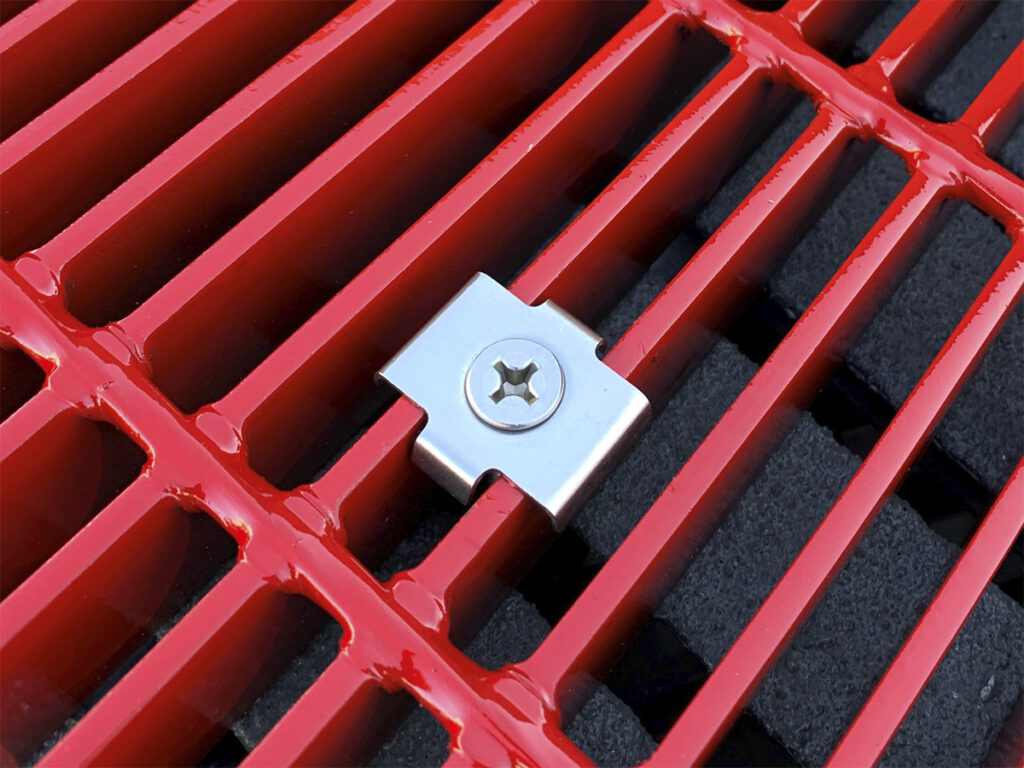
“G” Clips
Mechanical fasteners installed from the top surface of the grating create a friction connection with the flange supporting the panel. “G” clips are easily installed without drilling or welding.
Countersunk Lands
The narrow spacing of close mesh grating allows for countersinking or milling of the bearing bars to support bolt shoulders. Flat head screws or self-drilling fasteners shall be supplied by others.
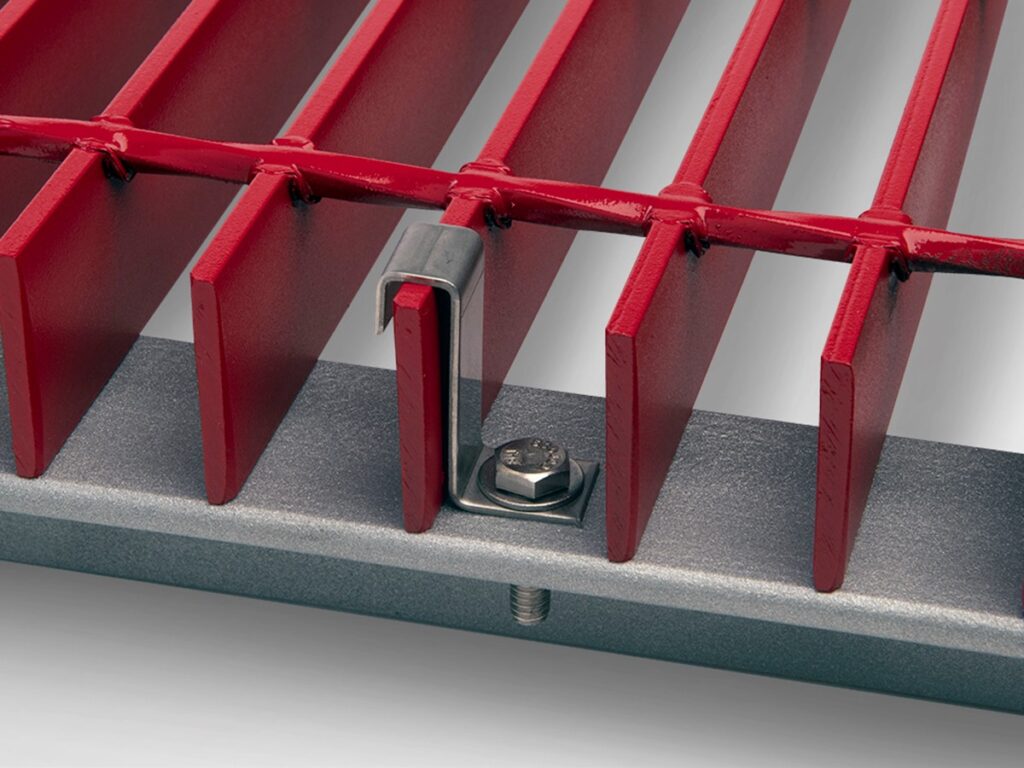
“J” Clips
Narrow formed clip captures one bearing bar when spacing is limited, frequently 11/16″ on center. Cap screws and other fastening hardware shall be supplied by others.
To provide the best experiences, we use technologies like cookies to store and/or access device information. Consenting to these technologies will allow us to process data such as browsing behavior or unique IDs on this site. Not consenting or withdrawing consent, may adversely affect certain features and functions.
Functional
Always active
The technical storage or access is strictly necessary for the legitimate purpose of enabling the use of a specific service explicitly requested by the subscriber or user, or for the sole purpose of carrying out the transmission of a communication over an electronic communications network.
Preferences
The technical storage or access is necessary for the legitimate purpose of storing preferences that are not requested by the subscriber or user.
Statistics
The technical storage or access that is used exclusively for statistical purposes.The technical storage or access that is used exclusively for anonymous statistical purposes. Without a subpoena, voluntary compliance on the part of your Internet Service Provider, or additional records from a third party, information stored or retrieved for this purpose alone cannot usually be used to identify you.
Marketing
The technical storage or access is required to create user profiles to send advertising, or to track the user on a website or across several websites for similar marketing purposes.